











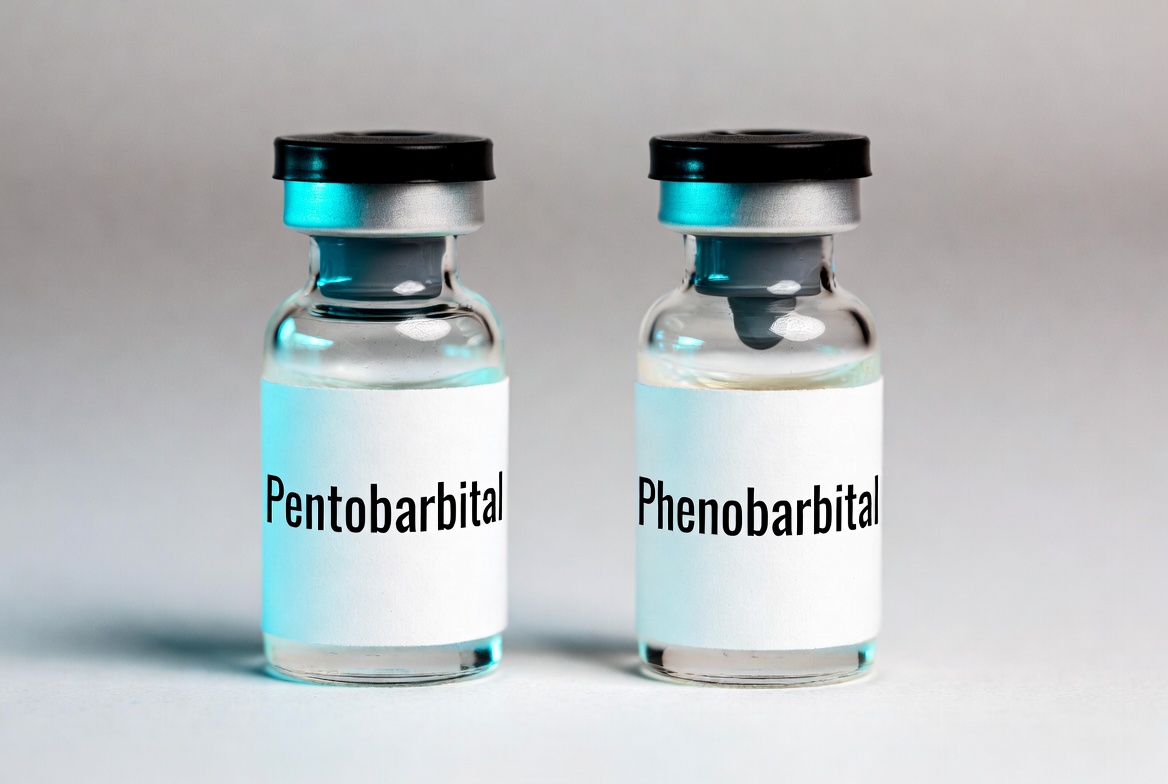
When people research pentobarbital vs phenobarbital, they often want a clear comparison of these two barbiturates and how they relate to voluntary euthanasia or medical assistance in dying. Both drugs belong to the same class and affect the central nervous system, yet they differ in speed, duration, potency, and typical medical use. This educational article explains the main differences in plain language while staying strictly within legal and ethical boundaries.
What Are Pentobarbital and Phenobarbital?
Pentobarbital and phenobarbital are barbiturates. They increase the effect of GABA, a chemical that calms brain activity. Because of this shared action, people sometimes confuse the two. In reality, their chemical structures and body-processing times create very different clinical profiles.
Understanding pentobarbital vs phenobarbital starts with knowing that one acts faster and more intensely, while the other lasts longer and is milder as a sedative.
Key Pharmacological Differences: Pentobarbital vs Phenobarbital
The table below summarizes the most important differences between the two drugs. For a detailed clinical overview of pentobarbital, you can also refer to the NCBI StatPearls overview of pentobarbital.
| Feature | Pentobarbital | Phenobarbital |
|---|---|---|
| Duration class | Short- to intermediate-acting | Long-acting |
| Onset of action | Faster, especially when given intravenously | Slower |
| Half-life in adults | About 15–50 hours | About 50–150 hours |
| Lipid solubility | Higher (reaches the brain more quickly) | Lower |
| Main traditional use | Short-term sedation, anesthesia induction, emergency seizures, veterinary euthanasia | Long-term epilepsy control and anticonvulsant therapy |
| U.S. controlled schedule | Schedule II | Schedule IV |
| Relative sedative strength | Higher | Lower |
Because pentobarbital dissolves more easily in fat, it crosses into the brain faster. This produces quicker and deeper sedation. Phenobarbital stays in the body longer and is better suited for steady seizure prevention at doses that cause less immediate drowsiness.
Everyday Medical Uses Outside End-of-Life Care
Doctors use these medicines for different reasons in normal clinical practice.
- Pentobarbital serves short-term needs such as calming a patient before a procedure, treating hard-to-control seizures, or (in veterinary medicine) providing a peaceful death for animals when required.
- Phenobarbital remains a standard long-term treatment for certain types of epilepsy, especially in children and newborns. Palliative care teams sometimes use it for difficult agitation or seizures near the end of life.
The two drugs are not interchangeable. Confusing them can lead to dosing or safety errors.
Pentobarbital vs Phenobarbital in Voluntary Euthanasia Contexts
Only a small number of places allow voluntary euthanasia or physician-assisted dying under strict rules. These include the Netherlands, Belgium, Switzerland, parts of Canada and Australia, and a limited number of U.S. states. In those regulated systems, barbiturates have appeared in official protocols.
Looking at pentobarbital vs phenobarbital in this narrow setting shows a clear pattern. Pentobarbital has been the more frequently chosen short-acting agent because of its relatively rapid onset. Several well-known systems (including Dutch oral protocols and Swiss practice) have historically relied on it when a physician-supervised process is followed.
Phenobarbital appears much less often as a main single agent. Its slower start and longer action make it less suitable when a more predictable and relatively prompt outcome is desired. In some U.S. medical-aid-in-dying discussions, clinicians have studied adding phenobarbital to multi-drug oral combinations, especially when shorter-acting barbiturates became hard to obtain. It is also used in palliative sedation for symptom control rather than as a primary agent for ending life.
Supply restrictions have influenced practice. Links between certain barbiturates and capital punishment led to manufacturing and export limits. As a result, some jurisdictions developed alternative combinations when traditional short-acting options became scarce.
Why the Differences Matter
The practical distinction between the two drugs centers on speed and reliability under medical supervision. Faster-onset agents such as pentobarbital have been preferred when a quicker progression to unconsciousness is intended. Longer-acting agents such as phenobarbital fit better with anticonvulsant therapy or extended palliative sedation.
These choices only exist inside tightly controlled medical frameworks that require eligibility checks, informed consent, waiting periods, and official reporting. They have no application outside those legal systems.
Legal and Safety Considerations
Both pentobarbital and phenobarbital are controlled substances. Unauthorized possession, sale, or use is a criminal offense in most countries. Obtaining or using either drug outside licensed medical channels carries serious legal risks and health dangers, including unpredictable effects and possible contamination.
Voluntary euthanasia and assisted dying remain illegal in the large majority of places. Even where the law permits them, the process must involve qualified physicians and meet strict criteria. Public discussion of legal reform is separate from any practical handling of these medicines.
Conclusion: Choosing Clarity Over Confusion
A careful look at pentobarbital vs phenobarbital shows that small chemical and pharmacokinetic differences create large practical differences. In the limited context of regulated voluntary euthanasia or medical assistance in dying, pentobarbital has historically been the more commonly referenced short-acting option. Phenobarbital has played a smaller or supporting role.
This article exists only to improve understanding of the pharmacology and historical patterns. It is not medical advice, legal advice, or any form of instruction. Anyone facing end-of-life decisions should speak with qualified physicians and legal professionals familiar with local law. People in emotional distress or having thoughts of self-harm should contact emergency services or a crisis line such as 988 in the United States right away.
Important disclaimer: Laws, medical protocols, and drug availability change over time. Always check current rules with official medical and legal authorities in your area. This content is strictly educational and does not encourage or assist any illegal activity.


